Doing it all? No. Doing what matters? Definitely.
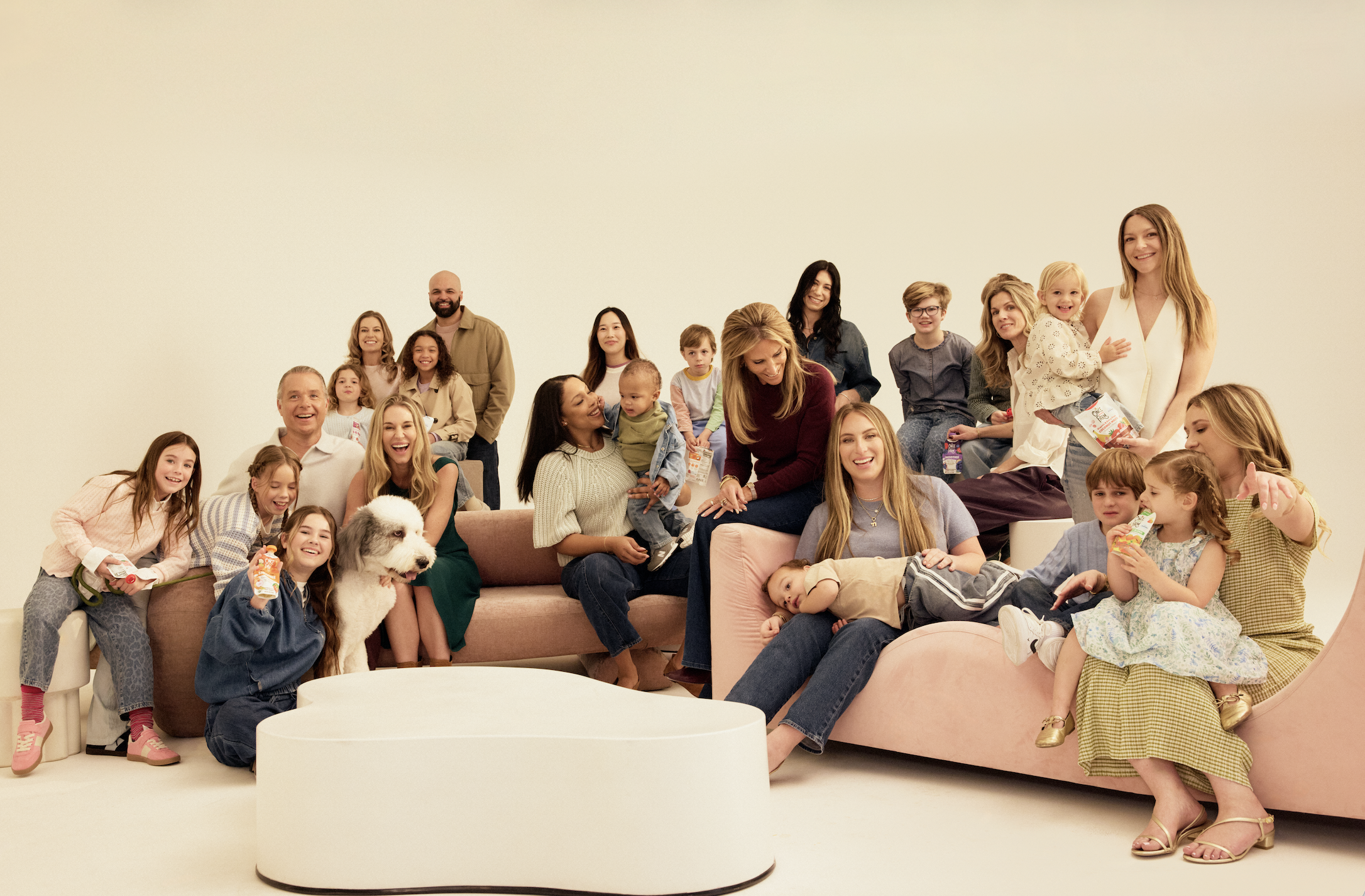
Once Upon a Farm & The Female Quotient: It Takes a Village, Photographer: Brittney Christie
May 12, 2026
File under “we could have told you that” 📂: being a working parent isn’t easy. There’s a lot to juggle, including meetings, doctor visits, extracurriculars, healthy food on the table…and somehow still being present both at work and at home. The phrase “it takes a village" would be cliché if it weren’t so true.
And in the U.S., the reality is even tougher for working mothers. Studies show that mothers face what’s known as the motherhood penalty, where pay can decrease by 5% to 20% for each child they have. Motherhood can also change how women are perceived professionally, being viewed as less committed or less competent.

Cassandra Curtis and Family
But here’s where it gets interesting: many employees don’t believe parenthood slows careers down. Research from The Female Quotient and Ipsos, in partnership with Once Upon a Farm, finds that 64% of surveyed employees1 ages 21-65 say parenthood accelerated their careers and leadership track. Among parents in this study, that number jumps to 69%.
In other words, becoming a parent isn’t a tradeoff, it’s an advantage. And when parents have support, they don’t slow down; they step up. Cassandra Curtis, Co-Founder and Chief Innovation Officer at Once Upon a Farm, shared, “My biggest hope for how Once Upon a Farm can help families is that we are a part of their village. We’re their ally from babies to big kids so that they can excel in their careers and their lives.”
82% percent of surveyed parents believe their ambition increased after having children. Yes, increased. It’s not exactly the narrative we’ve been sold for years about mothers “stepping back.” Parenthood sharpened their sense of purpose and deepened their drive. In fact, 72% of these parents started to make bolder career moves after becoming a parent. As Talia Bender Small, President of The Female Quotient, explains, “It’s made me more ambitious because I want to be a role model to my son and my daughter. I’m grateful to be doing work that will hopefully impact their generation when they enter the workplace. They fuel me every day.” Parents are succeeding in their careers because they have children, not in spite of it.
In fact, 81% of surveyed employees, parents and non-parents alike, agree that caring for children is a form of leadership. Cassandra Curtis, says motherhood reshaped how she leads: “Control does not work as a strategy; it’s about having patience and flexibility and seeing potential in someone, even when they don’t see it themselves. Those skills are paramount for a leader.”
That philosophy is reflected in the company itself. For nearly a century, baby food looked largely the same: shelf-stable jars lining grocery store aisles with few fresh options. Since launching in 2015, Once Upon a Farm has reshaped the entire category with organic, refrigerated children’s food designed to be as nutritious as it is convenient. In many ways, that innovation is part of the modern parenting village too. For parents, having healthy food options that don’t require extra time or compromise is one more form of support.
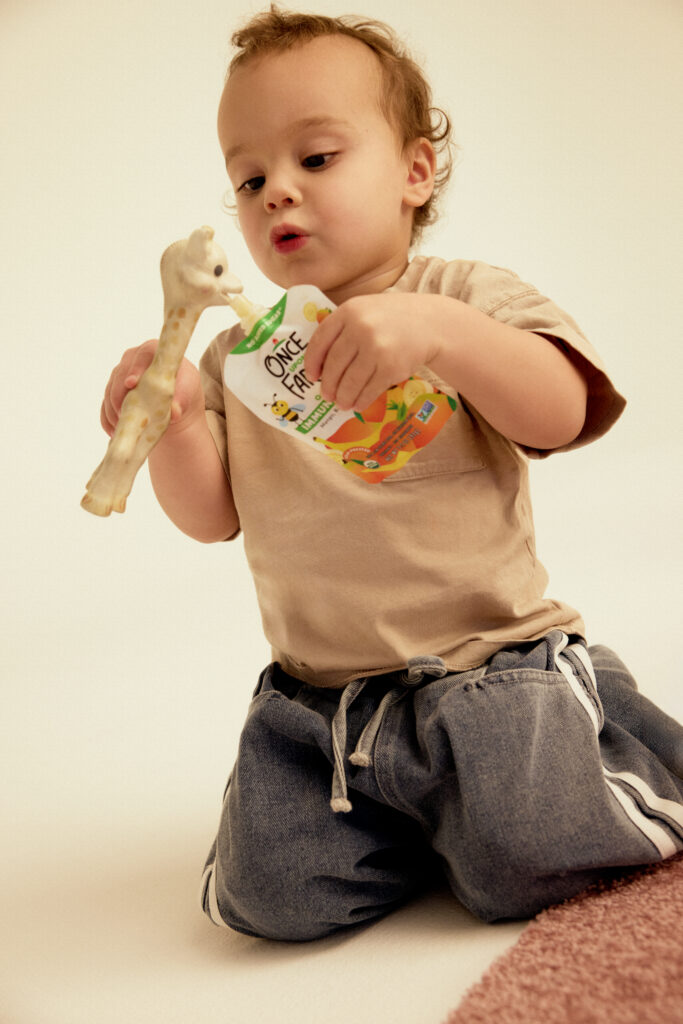
Dylan, 2 years old, Mom: Niki Fleshner
CEO and Founder of The Female Quotient, Shelley Zalis, shares, “When women become mothers, they often develop deeper empathy, resilience, and the ability to listen and lead with humility. From my own experience, becoming a mother didn’t make me step back from leadership. It made me step into it more fully.” Her daughter and Chief Experience Officer at The Female Quotient, Niki Fleshner, adds, “There’s no one 'right way' to parent. Do it your way, and lean on your village. Trust that you’re enough, and that doing it the way that works for you and your family is exactly the way it’s meant to be.”
Katie Marston, Chief Marketing Officer at Once Upon a Farm, also feels that parenting has given her a leg up: “It’s made me better at prioritization and I am more comfortable with chaos. I have two children with very different personalities, one being neurodivergent. They have reminded me to alter my communication and management style depending on the person I am talking to. And to find the 'special' in each one.”
Success comes down to infrastructure: the village around you. And that village includes employers. Companies that offer flexible schedules, parental leave, and the ability to work remotely as needed see real results. In our study, 78% of all employees and 86% of parents say they would stay longer at a company that supports parents.
Supporting caregivers isn’t just nice; it’s strategic. Caleb Fields, Head of People & Culture at Once Upon a Farm, explains that supporting parents is baked into the company’s culture: “We consider ourselves to be a parent’s ally. Sometimes companies make people feel like they have to choose between being present at work or being present at home. Once Upon a Farm has been intentional about keeping support for parents at the core of who we are, so people can do both.”
The good news is that 74% of surveyed parents confirm that their workplace supports them as a caregiver. Rachel Apirian, Chief Content Officer at The Female Quotient, shares, “Our CEO, Shelley Zalis, always tells us that if something important is happening for our kids, such as a soccer game, field trip, or school presentation, we should be there. No one will remember the meeting you missed, but your kids will remember the moments you showed up for. Many of us are parents going through it together. We’ve become each other’s village.”
The village beyond the workplace, including partners, siblings, grandparents, nannies, and friends, all play a crucial role. 74% percent of surveyed parents say sharing caregiving responsibilities helped them advance their careers. For many families, that also means challenging traditional gender roles. Historically, when a heteronormative couple has had to choose between work and caregiving, the responsibility has fallen to the woman to stay at home. But when both partners share the load, a woman’s career, ambitions, and financial autonomy are not sidelined. Vanessa Buenger, Head of Creative Strategy & Partner Solutions at The Female Quotient, says of her relationship with her husband, “We don’t prescribe to typical gender roles and we split caregiving responsibilities equitably. If one of us is having a week where we have less to give, the other steps in.”
Parenthood is one of the most demanding roles there is. It’s also a powerful training ground for leadership: empathy, patience, multitasking, flexibility, organization, communication, prioritization, accountability, and crisis management…to name a few. When 81% of all surveyed parents and non-parents combined say that caring for children is leadership, our workplaces should reflect that reality. As Cassandra Curtis shares, “You can follow your passion and you can have a family. It's just about getting support along the way where you need it.”
The leaders shaping organizations are often navigating bedtime negotiations and business negotiations. This isn’t about doing it all. It’s about doing what matters. And what matters, at home and at work, is leading with care.
[1] Research was conducted among individuals between the ages of 21-65 who work full time, part time, or are self-employed